Category: Thank you page

  • The National Theatre as a stage for selling amnesia forward!

    Mashujaa in Tutu Skirts!

    Over the weekend, I attended Tales of Mashujaa at the National Theatre. Before the show began, a pre-event unfolded outside the venue, an unexpected yet captivating blend of opera and celebration. It was a refreshing reminder that the National Theatre can be more than a performance space; it can serve as a cultural crossroads, bringing together different expressions of our society.

    I was joined by a colleague from the Republic of Tatarstan, whose fascination with the performance enhanced my own experience. He had not expected to enjoy an opera performance, yet found himself completely drawn in. Moments like these remind us that art transcends language and culture, speaking directly to our shared humanity.

    Then we went in to watch Mashujaa and the fusion quickly turned into confusion. First, a mzungu delivered an unusually long introduction. Mashujaa wa Kenya introduced by a mzungu is, frankly, a mockery of the colonial question and of our ongoing struggle to define who or what a hero in Kenya truly is. Any enactment of our heroes or heroism in this land or any country that has been colonized, cannot and should never include any representation of the colonial memory, not even in skin colour.

    To make matters worse, the lady was dressed in a short, white skirt. I often wonder if performers realise that, on a theatre stage, the audience is quite literally seated beneath them. Eeeh, nitachia hapo!

    This particular skit was staged by Dance Centre Kenya, and I would give it a four out of ten. Three of those points go purely to the children, because, honestly, kids perform what they’re told, and they did so with commendable earnestness. The remaining one point? That’s for simply making it to the National Theatre, where, I imagine, some well-meaning bureaucrat stamped approval on the confusion.

    The so-called fusion of music was another story altogether, a tangle of instrumentals with drum sounds that refused to commit to any rhythm. I hesitate to call them beats, because African drumbeats, real ones, make your body move before your mind even agrees. These, however, were limp. If such a thing as a limp drumbeat exists, this was it.

    The children danced with ballerina steps throughout the entire play. Mashujaa drawn from our community mythologies gliding delicately across the stage, as if our heroes had traded spears to audition for a European stage. It was painful to watch. The play was said to have been produced by Kenyans educated in the West, which made me once again question what truly constitutes a “good” education.

    The entire production was filtered through a colonial lens and it didn’t even attempt to hide it. How else does one explain a white child standing with her foot over the body of a black child, spear in hand? It was a shameless display, perpetuating the same old stories that have long diminished us. To stage that in the name of Mashujaa was not just tone-deaf; it was tragicomic.

    It was also curious to note that this narrated, ballerina-mime; whatever that hybrid was, had mostly mzungu children carrying spears, while the African kids clutched sticks. I couldn’t tell whether this was a safety precaution (using again the mzungu lens) or a deeper metaphor for how power is still assumed to be distributed, even in play. Perhaps it was simpler than that; maybe African parents refused to buy spears for a theatre production. I know I wouldn’t have. My mother wouldn’t have either. And my grandmother? She’d have slapped anyone who dared ask for her spear to go on stage. As for the men, my father, my grandfather; let’s just say, for everyone’s peace, we’ll keep violence out of this conversation.

    Now, let me get to the worst part of the play. If it hadn’t been performed by children, I would have given it a negative one and that’s only because it was staged at the National Theatre. Which raises a serious question: how exactly do we vet who can or should host events in this national space?

    The narrators read the script like ten-year-olds cramming for an exam they didn’t understand. There was no passion, no lift of the eyes from the paper, not even for a heartbeat. It baffled me beyond belief. They sounded as though they were encountering the script for the very first time, right there on stage.

    But the deal breaker was the pronunciation of African names, twisted through the English alphabet until meaning and music were both lost. Mugo wa Kibiru was read literally, and Kimnyole arap Turukat nearly escaped my comprehension altogether until I checked the programme. The only African name pronounced understandable was Gor Mahia. I do not think it is because they respected the name, but because of the football team, we have all heard the name so many times it left no room error. I am sure those who watched the performance narrated by John Sibi Okumu had a much better experience here.

    The realization that art, in some sectors of our society, has become a mirror of the very power structures we claim to resist is unsettling. The National Theatre, once meant to be a space for imagination and truth-telling, now reflects our collective amnesia. When our children cannot re-enact our stories without borrowed footsteps or foreign-approved rhythms, we begin to erase the memory of our heroes. Perhaps it is time to stop clapping and start remembering. If neo-colonialism ever sneaks upon us, let it come through politics or trade, not through the quiet vessel of our children.

    We are selling amnesia forward, neatly packed as arts and progress.
  • Beyond coloured paper: African Leaders are Breaking Old Chains

    A new chapter in post-colonial history – Africa is challenging colonial economies

    Africa continues to navigate a contradictory and often very conflicted post-colonial landscape. Decades after independence, the continent still finds itself entangled in structures and systems that echo colonial control.

    There is a need to decolonise most of our inherited systems, from our economies to heritage institutions, our belief systems to our ways of worship. Africa’s economies are shaped by external interests, our heritage institutions curated through borrowed lenses, and even our belief systems and ways of worship reconfigured to mirror worlds not our own.

    The result is a profound disorientation. So many distortions of history exist that many Africans can no longer tell what the true African story is. Our past has been fragmented, rewritten, and often silenced, leaving us with borrowed narratives that fail to capture who we are.

    I was first introduced to the uncomfortable but necessary idea that charities in Africa often perpetuate poverty rhetoric and reinforce dependency on the West through the powerful words of Mallence Bart-Williams. She reminded us that the story of Africa is not simply one of need and lack, but of abundance, resilience, and agency. Yet, for as long as we accept externally imposed definitions of who we are, we risk being trapped in cycles of dependency, distortion and extortion.

    The first time I listened to a TED Talk by Mallence Bart-Williams, I was overwhelmed by conflicting emotions—anger, frustration, even a trace of ridicule. It was difficult to tell which feeling outweighed the others.

    On that podcast, Mallence begins by proudly declaring that she comes from the most beautiful continent in the world, and on this point, I agree with her, fully and without hesitation. She is from Sierra Leone, a country endowed with fertile lands that produce coffee, cocoa, fruits, and vegetables, alongside exquisite timber such as mahogany and teak.

    Sierra Leone, like many other African countries, is also rich in natural resources: gold, diamonds, petroleum reserves, and over 20 other precious minerals. It holds the largest iron ore deposits in Africa, and the third-largest in the world. These resources are not just statistics; they are the very backbone of global industry and modern living. The West depends on Africa’s wealth to power aeroplanes, manufacture cell phones and computers, and adorn itself with the symbols of status and power – gold and diamonds.

    She asks the multi-million-dollar question: Why is it that African currencies are worth only a fraction of Western currencies, when it is Africa that holds the gold reserves?

    The dependency is not what we have been told. Africa does not depend on the West: the West depends on Africa. This imbalance is maintained by destabilizing Africa’s richest nations and masking the truth through massive PR campaigns. These campaigns, often fronted by so-called charitable organisations, push the narrative that Africans are starving and dying, at war with each other and helplessly in need of saving.

    Meanwhile, Africa continues to exchange her vast resources, gold, diamonds, and more, for coloured paper. But what if Africa sold her resources at true world market prices, in a market where the producer sets the rules, as is customary in world markets? What would happen to Western economies that have been built on a post-colonial system that is deeply anchored in ne0-colonialism?

    To reclaim Africa’s story, the continent must be intentional about unlearning what it has been fed and relearning our histories from within. This means amplifying African voices, interrogating the ways our institutions are structured, and critically re-examining the frameworks: economic, cultural, and spiritual, that govern our daily lives.

    A new brand of leadership in West African countries has started re-writing the African narrative. In 2023, Burkina Faso, under President Ibrahim Traoré, terminated its military agreement with France and demanded the withdrawal of French troops, asserting sovereignty in both defense and monetary affairs. Shortly after, Niger’s military government ordered French forces to leave, including those guarding strategic uranium mines that have long fueled France’s nuclear energy industry while contributing little to Niger’s own development. Chad, too, announced in 2024 that it would not renew defense accords that kept French troops stationed on its soil.

    Many other West African nations have begun taking strong stands against lingering colonial economic ties to France. Under the CFA Franc system, 14 countries have been required to deposit a large share of their foreign reserves into French-controlled accounts, in colonial debt repayment systems that defy all logic, effectively subsidising French economic stability.

    There are those who will argue that these events: the withdrawal of French troops, the rejection of colonial debt arrangements, and the pushback against the CFA franc, are not directly related to France’s current economic woes. But the fact remains: time is re-writing the African narrative. A new generation of leaders is emerging, unafraid to confront the old order and determined to reclaim sovereignty over their nations’ resources, economies, and identities. Their interventions mark not just a political shift, but a historical turning point for Africa. This is starting to look like decolonization.

  • Your free resources/Readers gifts/Little actions to say thank you

    Thank you for visiting Muthonithangwa.com — your one-stop resource for grounded stories on the human experience.
    Here, you’ll find books for children, reflections on caregiving — whether for the young or the old, the well or the ailing — and articles that celebrate our culture and heritage. This page will continue to grow, offering practical tools and thoughtful writing you can return to again and again.

    We begin with something simple but vital: a Medical Emergency List — because being prepared is a quiet form of love.

  • The Truth About Caregiving: Love, Loss, and the Strength to Stay

    The strange kind of love – Reflections on caregiving

    Last week I posted something on social media about caregiving.

    They don’t tell you that caregiving is a strange kind of love. You watch your loved one fade like the setting sun — while you are supposed to shine like sunrise. It is also love in the purest form.  

    I didn’t expect the wave that followed. Now I feel that the moment is ripe to deepen the conversation with clarity and hopefully some grace, for I clearly touched a nerve in many different ways.

    Many replied with quiet tears: “Me too.”
    Others, with concern: “But what about your own life, are you ok?’’
    And a few, with sharp practicality: “It’s a waste of time, energy, money.”

    Those who are living it

    For those who are living it. You don’t need me to explain this kind of love. You’re living it. You’ve learned that time bends — that a single hour can feel like a year when the person you care for no longer knows your name, or repeats the same question twelve times before breakfast.

    You’ve felt that pang — the one where love is still strong, but recognition is gone. And yet, you carry on. You show up. You hold the line between memory and forgetting.

    I see you. And more importantly — you are not invisible to your loved one and others who give care.

    My mum no longer remembers my name — she calls me Mummy, the same way I’ve always called her. It’s her strange, beautiful gift to me.
    If she ever calls me by name, especially at night, we know something’s wrong. My name has become a signal — not of recognition, but of pain. A quiet plea for help.

    For those who fear it

    Some asked: “What about your dreams?”
    “Isn’t this a kind of death sentence?”

    I understand where that comes from. It can be hard to watch someone devote their life to a role that demands so much and gives back so little in tangible terms.

    And yes — it’s hard. It can feel like a slow erasure of the self. But that doesn’t mean it’s a dead end.

    Caregiving didn’t kill my dreams.
    If anything, it lit a fire under them. Gave them purpose. Clarity.
    It stripped away the noise — all the distractions, the vanity goals, the borrowed ambitions I once mistook for my own.

    In caring for someone else so completely, I finally saw what I was meant to fight for. This wasn’t an excuse to give up — it was my liberty card. Not the kind we wave when we want out, but the kind we earn when we finally understand what matters.

    For some of us, caregiving isn’t the death of our lives — it’s the rediscovery of what matters. It’s a different kind of becoming. A quieter kind. A harder kind. But not lesser.

    For those who call it a waste of time, I guess money and emotions too!

    I won’t argue. I simply offer this: Not all value is transactional. Not all time has to earn. And not all love must be proven with profit.

    Some things are sacred — not because they are easy, but because they strip us down to our essence and ask us: Who are you, when no one claps?

    That’s what caregiving does.
    It’s not just about caring for someone else — it strips you bare and shows you who you really are. It reveals the self.

    And to put it in terms that might land better: adulthood is a scam.
    Maybe love won’t scam you — not the real kind — but life will.
    You will be scammed. By duty, by capitalism, by expectations dressed up as dreams.

    I’ve simply chosen my scam.
    Caregiving is the one I picked with my eyes open.
    You get to choose yours too.

    For those of us who will stay.

    I don’t romanticise caregiving. I know the toll. The isolation. The fury. The bone-deep fatigue. But I also know the quiet, searing beauty of being someone’s anchor when they are lost to themselves.

    Caregiving isn’t for everyone. It shouldn’t have to be. But for those of us who walk this path — by choice or by circumstance — let it be known:

    This is not a waste.
    This is not weakness.
    This is love — strange, costly, inconvenient, and transformative.

    Last word.

    If you’re caregiving, or considering it, or afraid of what it might make of you — welcome. There’s room here for your story. Your fear. Your grit. Your grief. Your uneven strength.
    We don’t have to agree on everything.
    But we can choose to hold space — for each other, and for the versions of ourselves we’re still becoming.

    Because in the end, that’s what caregiving teaches us:
    How to hold.
    Even when it hurts.
    Even when it fades.
    Even when it’s never returned.

    And maybe, in this fractured world, that’s the most radical thing left to do.

    If you’re walking this caregiving path too — or just want to connect — I’d love to hear from you.
    You can leave a comment below or reach me via the contact page.

  • “Soulmates, Sketches, and Other Expensive Distractions: “I Bought a Soulmate sketch and Found Idris Elba… and a Tyre Guy in Kiambu!

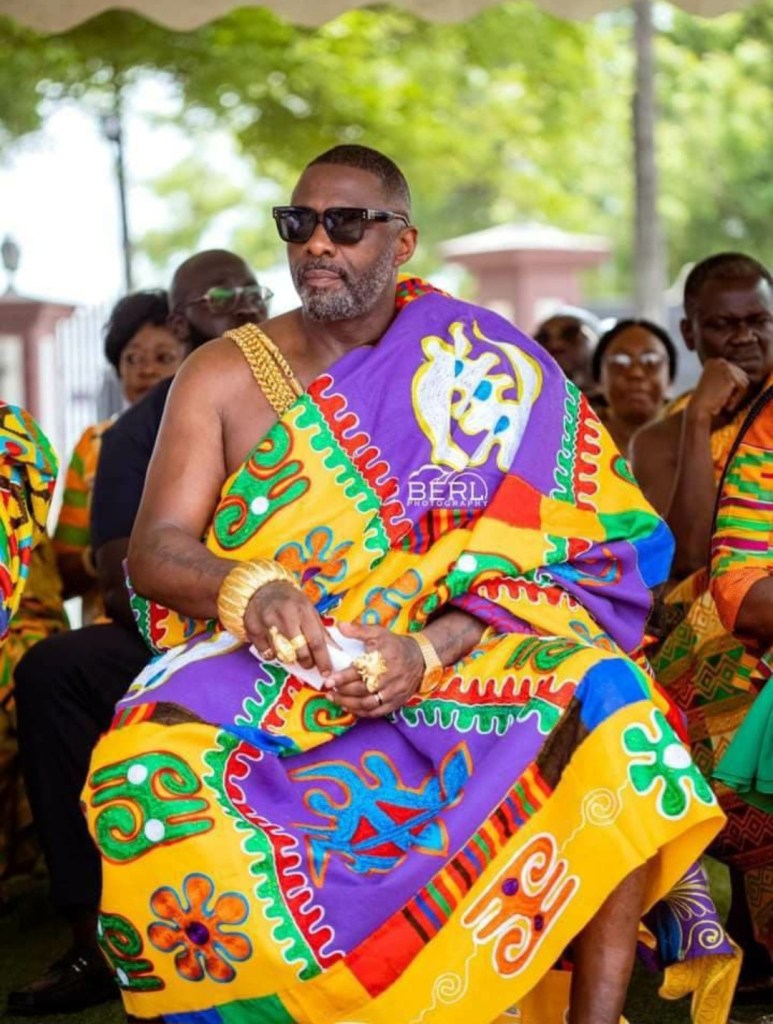
    The face of my soulmate sketch—or was it Idris?

    I tried a soulmate sketch – this is what happened! It floored me!

    I was supposed to be doing something important on the computer. You know—something grown-up. Like paying bills, writing a proposal, or finding original spare parts for my Kwid. Does anyone ever try to find fake spare parts? Anyway!

    That little red slay queen is giving me more problems than dating—imagine. She looks cute in the driveway, sure, but maintaining her is like trying to love someone who keeps ghosting you, then showing up when your phone battery is at 1%.

    So, there I was, meant to be searching for a reputable auto-parts dealer, and instead I found myself thinking about soulmates. I don’t know why. Maybe it was the silence. Maybe it was the 17 open tabs. Maybe it was the fact that even my car is more demanding than my love life.

    But something in me whispered: “What if your soulmate is out there… but can’t find you because he’s using Waze in Nairobi?”

    And just like that, I fell down a rabbit hole. Not the kind Alice stumbled into—mine was paved with affiliate ads, slightly questionable testimonials, and an offer to receive a psychic drawing of my soulmate for a mere $29. A man I’ve never met, drawn by someone who has never met me. All via the internet. What could go wrong? Lol!

    The Woman Who Knew Too Much

    This thing of falling into rabbit holes goes way back—way back to the days when I used to mark student scripts in two weeks flat.

    Now, don’t get me wrong—it’s not like they were PhDs. Naaah. These were first-years. Introduction to Anthropology. Fresh out of high school, armed with confidence and vibes. But don’t be fooled. Even undergraduate scripts can wear you down. By day three your eyes glaze over, your red pen starts leaking into your coffee, and every sentence reads like a philosophical riddle wrapped in grammatical chaos.

    At the time, I had a neighbour—Betty. She was one of those highly competent, quinoa-soaking, herbal tea-brewing women who was trained in something expensive and mysterious called the Waldorf Method. She teaches children through storytelling, seasonal baking, and probably the gentle use of moss.

    She was also the unfortunate recipient of my emotional soundtrack: a constant switch between soul music and loud Kikuyu classics—whatever it took to stay sane while marking papers in which students responded as if armchair anthropologist was a type of furniture.

    I liked Betty. A lot. But at some point in our friendship, she sat me down and said: “Muthoni, I think you might be…easily distracted.”

    She said it kindly. Like a teacher breaking the news that your child eats crayons.

    Naturally, I denied it. I even built an internal fortress to resist the idea. Brick by defensive brick. But sitting here today, browsing a psychic art website instead of doing my actual work, I felt a small crack form in the wall. Betty, it turns out, was just seeing the kindergartener in me.

    The Checkout Moment (A Crisis of Faith)

    I won’t lie. The site was convincing. It promised not just a drawing, but a description of your soulmate’s personality, their energy, their life purpose. At one point, it claimed the sketch could bring clarity to my love life.

    I had questions.

    What if the sketch looked like my ex? Would I be expected to forgive and forget just because this time, he was delivered as a digital PDF?

    What if it looked like that one toxic boss I used to work with? The one who sat upstairs with a big stomach, for six whole years, and did nothing but ruin the energy of the entire organization just by existing? Because weeh!  Some people!

    It wasn’t just a purchase. It was a surrender. A small, whimsical surrender to the part of me that still believes in signs, serendipity, and psychic sketch artists working overtime on the internet.

    I was amused and mildly afraid. This was either an act of self-love—or a red flag on steroids. At one point, I even paused and asked myself, “How much does therapy cost again?”

    It might’ve been cheaper.

    That’s when I remembered Betty. And the rabbit holes.

    “Muthoni, stay focused,” I whispered.

    The Reveal

    The email arrived the next day. No ceremony. No cosmic lightning. Just a subject line: “Your Soulmate Sketch Is Ready!”

    I clicked. And there he was.

    A man. With eyes that had seen things. Eyebrows that meant business. A mouth that looked like it only spoke in riddles. He looked like the kind of man who fixes tractors in silence, writes poetry in secret, and cries during Finding Nemo.

    I stared at the sketch for a long time.

    Was he handsome? In a rugged, silent-type way, yes.
    Was he familiar? That was the strange part—maybe.

    I felt something. Not certainty, but curiosity. A flicker. A spark. The tiny, ridiculous possibility that maybe, just maybe, this internet art experiment wasn’t completely unhinged.

    So, naturally, I did what any self-respecting woman would do:
    I ran him through Google Lens.

    And lo and beholdthe sketch matched fifteen different men.

    A tech CEO in Finland. A gospel singer from Uganda. A man who sells tyres in Kiambu. But the only one I was remotely interested in was—of course—Idris Elba.

    Weeh, sasa itakuwa aje? I asked myself, suddenly deeply invested in the metaphysical logistics of relating with a British actor who doesn’t know I exist. Although… a journey in search of the tyre seller in Kiambu is probably more viable.

    I considered printing it out and framing it. Just to confuse future visitors. “Oh, that? That’s my soulmate. We haven’t met yet, but I like to keep him close.”

    What Did I Learn?

    That we have the permission to be curious – like children with a crayon and no regard for lines. That not every decision I make will be strategic – I just have to find balance between strategy and the why not?

    And yes, Betty was right—I am easily distracted. But sometimes distractions are the only way the soul gets a break from the grind. Sometimes they lead to laughter, to strange portraits, to blog posts.

    If nothing else, I now have a picture of a man I can show my mother when she asks why I’m still single.

    “Here he is, Mum. He’s psychic-approved.”

    If you would like to try your own stretch, here is your chance: https://www.soulmatesketch.com/2-01721767000544#aff=MuthoniThangwa

  • Decolonizing, but in English – Sorry Ngugi wa Thiongo

    One of Kenya’s greatest literary minds, transitioned to the realm of an ancestors on 28th May 2025. His passing marks the end of an era but, his words remain, sharp, urgent and uncompromising.

    A fierce intellectual and cultural worrier, Ngugi’s life was a long rebellion against the violence of colonialism and the subtle tyranny of mental enslavement. He chronicled the fractures of Kenyan society with the precision of a surgeon, form Weep not child to Wizard of the crow.

    In the 70’s Ngugi made a radical and irreversible turn, he rejected English as the primary medium for his fiction and turned fully to Gĩkũyũ his mother tongue, as the vessel of his fiction. It was a bold and reckless move in a world still dazzled by the queens English. I was first introduced to Ngugi by my father who handed me, like one might hand down a sacred guard – Caitani Mũtharabainĩ. I was about fifteen and should have been lost in the romance of a Mills and boons. But wapi? Here was the devil, no subtitles, no glossary. It was a real cross carry. I had to read with my brow furrowed and my pride bruised. I did not understand much in that book – but I began to hear the music of my own people in literature. Not in translation. Not in apology. But in their full thunderous voice. That was my fathers failed attempt to decolonize my mind.

    The next Ngugi book I read was the River Between – my all-time favorite. I still see that river in my minds eye, winding, patient, ancient. It curved more than just valleys, it carved questions in me. As a teenager, read it like a political allegory, which it is. But it wasn’t until much later as an adult, that I realized, it was also a love story. A quiet aching one. Ngugi had hidden tenderness in the fold of rebellion and I hadn’t known how to see it yet. The book that truly shifted my perception, the one that completed the decolonizing work my father had unknowingly began was Decolonizing the Mind. This book speaks to me, it had confronted me. It laid bare the subtle ways colonialism had infiltrated, our speech, our education, even our silence.

    As a professional in the heritage sector, decolonizing is a current buzz word, sprinkled generously in conference titles, panel discussion and funding proposals. But often we are merely regurgitating ideas Ngugi gave us, clear and uncompromising in the 70’s. He had mapped the terrain, language is the carrier of culture. But how many of us are willing to carry through? To write, speak and even dream in the mother tongues we were taught to abandon – so that we can seek validation in foreign languages. Ngugi’s choices were not without cost. Imprisoned without trial in 1977 for his play Ngaahika Ndeenda (I Will Marry When I Want), exiled for decades, and blacklisted at home, he paid the price of telling the truth. And yet, he never wavered. His later works—written in Gĩkũyũ then self-translated into English—demonstrate the full flowering of an imagination liberated from colonial scaffolding.

    Ngũgĩ wa Thiong’o is a giant—even in death. In the days following his passing, Kenya has been abuzz with his name. Social media timelines, radio talk shows, barbershops, and university corridors alike have all lit up with tributes, memories, and debates. As is typical of how we mourn our legends, opinion has split. Some question his wish to be cremated—calling it unafrican. Others lament that he spent most of his life in the West and has denied us the chance to celebrate him with the full-blown, trumpet-blaring African funeral party he surely deserved.

    But we forget—selectively, as humans often do—that Ngũgĩ did not choose exile the way one might choose a travel destination. He fled. He left Kenya not for luxury but for survival. His words had unsettled the powerful, and the price for speaking truth here was prison, censorship, and danger. The West gave him safety, not necessarily home.

    Ngũgĩ’s life was full of contradictions: a village boy from Limuru who became a global scholar; a man who fiercely denounced empire while teaching in its most elite institutions; a writer whose boldest act of nationalism was to write in a language many of his own countrymen could no longer read. And more recently, his son, Mukoma wa Ngũgĩ, unearthed painful truths from the vault of childhood—portraying him not just as a literary giant, but as a complicated, and at times violent, man. That too is part of the legacy. Greatness is rarely neat. In the end, Ngũgĩ remains what he always was: deeply human, deeply African, and utterly unignorable.

    And this commentary, ladies and gentlemen, has been written by a Muthoni—in English. My own decolonizing work, it seems, remains beautifully untidy. But perhaps that, too, is the point: it was never meant to be clean, or complete. Just courageous.

  • Who Owns the Past? The Case for Returning Africa’s Stolen Heritage

    One of the most significant and enduring debates in heritage and patrimony management today pits African, Asian, and Middle Eastern institutions against some of the most prestigious museums in Europe and North America. At the heart of this controversy lies the ownership and location of material heritage — including human remains, ritual objects, jewellery, sacred art, and items of practical utility — that were removed, often forcibly or under dubious circumstances, during periods of colonial conquest and control.

    Some of these objects carry immense cultural and spiritual meaning — like Egyptian mummies or ancestral remains — while others are of staggering monetary value, such as the gold regalia looted by the British from Kumasi in the Gold Coast (present-day Ghana) in 1874. Yet all of them are maternally priceless. These objects were once imbued with meaning in their communities of origin — not merely as museum pieces, but as living elements in cultural, spiritual, and familial systems.

    Today, African countries are striving to reclaim their histories — to understand and own their past on their own terms. A critical part of this involves the return of cultural artefacts removed under the shadow of violence, exploitation, and erasure. Whether stolen, “borrowed,” or questionably acquired, these objects were taken at a time when colonial powers believed Africans to be primitive and incapable of sophisticated thought or expression.

    African institutions are now asserting that while Europe is free to hold its opinions about African peoples, it does not follow that it should hold onto our heritage. These cultural artefacts — created, used, and revered within African value systems — belong back home, where we can care for them with the dignity and intention they deserve.

    Yet pushback has been fierce. In 2002, eighteen major museums — including the British Museum (London), the Louvre (Paris), the State Museums of Berlin, the Rijksmuseum (Amsterdam), and the Guggenheim (New York) — issued a statement titled The Declaration on the Importance and Value of Universal Museums. It argued that the objects in their collections had become part of the institutions’ identities, and by extension, part of the cultural heritage of the countries that now house them.

    But this logic is flawed. How can, for instance, a ritual object created for the veneration of African ancestors become part of English cultural heritage — unless, implausibly, the English also embrace ancestor worship? An object of religious significance cannot simply be decontextualised and then reinterpreted within a culture that does not share its foundational belief system. Cultural objects are not inherently meaningful in isolation; they draw power from the living systems of thought, belief, and practice that birthed them.

    The notion of “universality” touted by these museums is equally questionable. If universality excludes the vast majority of Africans, Asians, and Middle Easterners — many of whom will never afford the cost or receive the visas to visit these museums — then what universe is being referenced? One that conveniently omits those whose histories these objects represent?

    And even if some argue that culture is dynamic — that these objects may no longer serve their original function — their value remains immense. Their return would not only strengthen collections in African museums but also boost cultural tourism. Imagine a future where a visit to the Nairobi National Museum includes viewing artefacts long held abroad, amplifying Kenya’s appeal beyond its beaches and wildlife. It would be a game changer.

    Some institutions are setting an example. In 1999, the Carlos Museum at Emory University in Atlanta returned a 3,300-year-old mummy — thought to be Pharaoh Ramses I — to Egypt. This act was not just symbolic. It affirmed that honouring the rightful custodians of cultural heritage is possible. But it also triggered panic among Western museums, which feared that widespread repatriation could dismantle their prized collections.

    Still, the winds of change are blowing. The path forward must involve more than legal wrangling or high-minded declarations about “shared heritage.” It must include sincere dialogue, inclusion of formerly silenced voices, and a recognition that some things — sacred things — cannot be owned out of context. They do not “belong” to museums that stripped them of their meaning. Nor are they “safer” in Europe, as some argue. Cultural objects don’t just survive in vaults — they thrive when they live within the systems that created them.

    As a final thought, one must ask:
    If all the objects currently held in the British Museum were returned to Kenya, how many Kenyans would make their way to our National Museums to see them?

    That question matters. Because restitution is not just about objects. It’s about memory, dignity, and reawakening the public to what is — and has always been — rightfully ours.

    This article was first published by the East African Standard in 2007